Transport for London has confirmed that it will not renew Uber’s private hire licence, declaring that the company is “not fit and proper” to hold one in the capital. This decision comes after a thorough review of Uber’s operations, which revealed concerns around corporate responsibility and public safety. TfL has cited multiple issues that it believes pose potential risks to passengers and the wider public, ultimately concluding that the company has failed to meet the high standards required of private hire operators in London.
The current licence for Uber is set to expire on 30 September, and TfL has made it clear that it will not be renewed. For a city as dependent on private hire and ride-hailing services as London, this represents a significant shift in the landscape of urban transport. Millions of Londoners, commuters, and tourists rely on Uber daily for affordable, flexible, and accessible travel, and the potential removal of the company from the city could have immediate and long-lasting effects on both transport efficiency and the local economy.
Uber’s presence in London has been transformative over the past decade. The company has offered millions of people convenient access to door-to-door transport, often supplementing public transport during off-peak hours or in areas underserved by buses and the Underground. By providing a digital platform that connects riders with drivers almost instantaneously, Uber has helped reduce waiting times and offered a level of convenience unmatched by traditional taxis in many cases. Its app-based model, which allows for cashless payments, rating systems for both drivers and passengers, and easy fare estimates, has redefined the urban transport experience.
Removing Uber from London could create significant disruption. Many drivers who depend on the platform as their primary source of income may find themselves without work, while passengers may struggle to find equivalent alternatives. Traditional black cabs, while iconic and reliable, may not have the capacity to absorb the sudden influx of riders previously served by Uber. This could lead to longer wait times, higher fares, and a strain on other private hire services. London’s already congested streets could see increased traffic as commuters shift to alternative modes of transport, such as personal vehicles or minicabs, further challenging the city’s efforts to reduce emissions and promote sustainable travel options.
From an economic perspective, Uber has also been a significant contributor to London’s gig economy. Thousands of drivers have benefited from the flexibility to work around their schedules, supplement household incomes, or pursue full-time work without the overheads associated with operating their own vehicle fleets. The loss of Uber could have a ripple effect on local economies, particularly in areas where driving for the platform provides a vital source of employment. Restaurants, hotels, and event venues that rely on Uber for guest transportation may also face logistical and financial challenges, impacting service quality and customer satisfaction.
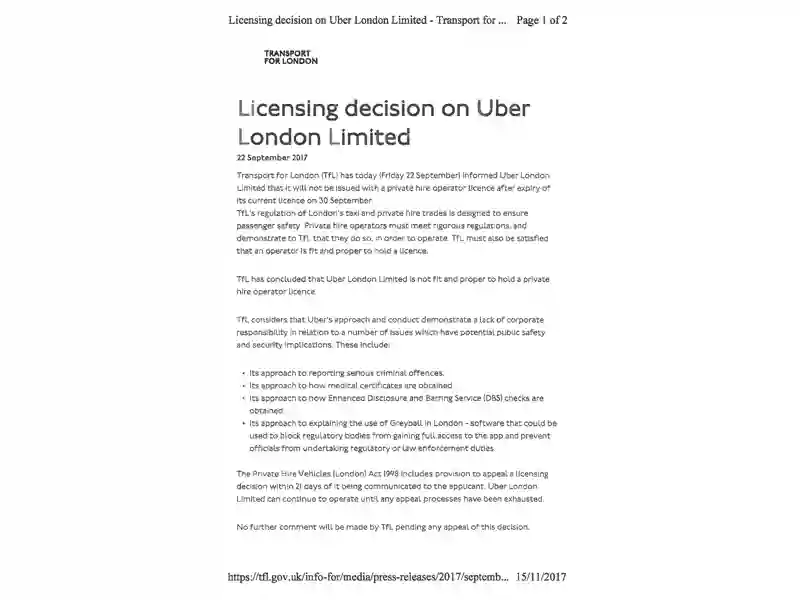
The decision not to renew Uber’s licence is rooted in TfL’s assessment of the company’s safety and compliance culture. Over the years, regulators have raised concerns about issues such as driver vetting, reporting of serious incidents, and adherence to operational standards. TfL concluded that Uber’s handling of these matters demonstrated a lack of corporate responsibility, which could have serious consequences for public safety. While Uber has invested heavily in improving safety measures, including real-time driver tracking, in-app emergency features, and tighter background checks, TfL’s ruling suggests that these initiatives do not fully address underlying compliance concerns.
Critics of the decision argue that removing Uber could disproportionately impact vulnerable communities, who rely on the service for affordable and flexible transport. For many Londoners living outside the central zones or with limited access to public transit, Uber provides a vital link to work, education, and essential services. Without it, some may be forced to rely on more expensive or less convenient alternatives, which could exacerbate social inequality and limit mobility options.
The ruling also has implications for London’s position as a global technology hub. Uber is a high-profile, US-based tech company with significant operations in the city. Its presence has attracted investment, fostered innovation in the transport sector, and encouraged the development of competing app-based mobility solutions. The absence of Uber may slow the growth of tech-driven transport innovations, potentially discouraging new entrants or investors from prioritising London as a key European market.
On the other hand, supporters of TfL’s decision highlight the importance of regulatory oversight and public safety. By enforcing high standards, the city ensures that private hire companies operate responsibly, maintain transparent accountability, and protect passengers from potential risks. This approach may encourage Uber and other companies to adopt stricter compliance measures, ultimately leading to a safer and more reliable private hire ecosystem. Additionally, the ruling could level the playing field for traditional black cabs and smaller operators, ensuring that all players in the market meet the same rigorous standards.
For passengers, the impact could be immediate and tangible. Commuters who have grown accustomed to app-based convenience, upfront pricing, and rapid pick-up times may need to adjust to alternative booking systems, which may be slower or less predictable. Tourists, who rely heavily on mobile apps for navigation and transport, could face longer waiting times and higher costs, potentially affecting their experience of the city. The uncertainty around availability and pricing may also push more people towards public transport, adding pressure to London’s Underground and bus network, particularly during peak hours.
Economically, the city may also see shifts in consumer spending patterns. Uber has traditionally supported a wide network of independent drivers, vehicle maintenance providers, and service-related businesses, all of which generate local revenue. With its removal, these economic linkages may weaken, leading to lost income for individuals and businesses dependent on the platform. Moreover, a sudden reduction in ride-hailing options could influence the hospitality and tourism sectors, as seamless transport is often integral to visitor satisfaction and business success.
The long-term implications for London’s transport infrastructure could also be significant. Uber and similar services contribute to a dynamic mobility ecosystem, providing options when public transport is unavailable or insufficient. The removal of a major player may shift travel patterns, resulting in increased demand for personal car ownership, taxis, or other private hire alternatives. This could exacerbate congestion, increase emissions, and challenge the city’s sustainability targets, which rely on reducing the reliance on private vehicles and promoting cleaner, shared transport solutions.
It is worth noting that Uber has previously challenged TfL’s rulings in court, arguing that it has taken substantial steps to improve safety, driver vetting, and reporting processes. Legal proceedings may continue, leaving some uncertainty around whether the ban will ultimately be enforced or temporarily lifted pending appeal. Nonetheless, the current decision sends a clear message that corporate responsibility and compliance are central to operating in London, emphasizing the city’s commitment to protecting passengers and maintaining the integrity of its transport network.
In conclusion, TfL’s decision not to renew Uber’s private hire licence represents a critical juncture for London’s transport sector and economy. While it is rooted in legitimate safety and regulatory concerns, the broader impact will be felt across multiple domains. Passengers may face reduced convenience and higher costs, drivers may lose income, and the local economy could experience ripple effects affecting hospitality, tech innovation, and service providers. At the same time, the decision reinforces the importance of strict oversight, public safety, and accountability, ensuring that all private hire operators meet the standards required to serve London responsibly.
Moving forward, the city will need to balance public safety with accessibility and economic impact, potentially encouraging alternative mobility solutions and promoting competition that can fill the gap left by Uber. Ride-hailing companies, regulators, and passengers alike will be watching closely to see how this unfolds, as London navigates a future where technology, safety, and commerce intersect in one of the world’s most complex urban transport ecosystems.
The removal of Uber may also catalyse innovative approaches to mobility, from electric vehicle fleets to expanded public transport integration, creating new opportunities for sustainable and safe urban travel. London remains a city defined by its resilience and adaptability, and while the short-term disruptions may be challenging, the long-term outcome could reshape the transport landscape in ways that benefit both residents and visitors alike.
Ultimately, the impact on London’s transport and economy will be significant, multifaceted, and ongoing. TfL’s decision highlights the challenges of regulating global tech companies operating in local markets, while also emphasizing the importance of public safety, compliance, and responsible corporate behaviour. For commuters, drivers, and businesses, the coming months will be a period of adjustment, reflection, and adaptation as London seeks to maintain its reputation as a safe, innovative, and globally connected city.
To stay informed on how this decision will affect travel options in London, passengers and business stakeholders are encouraged to monitor updates from Transport for London, explore alternative private hire services, and consider the broader implications for the city’s economy and daily mobility patterns.
This evolving situation underscores the critical interplay between technology, regulation, and urban life, demonstrating that even the most popular services must adhere to rigorous standards if they are to operate successfully in London’s highly regulated transport environment.
YOU CAN ALSO BOOK YOUR CAR IN OUR TOP DESTINATIONS

usA

EMIRATES

EUROPE